



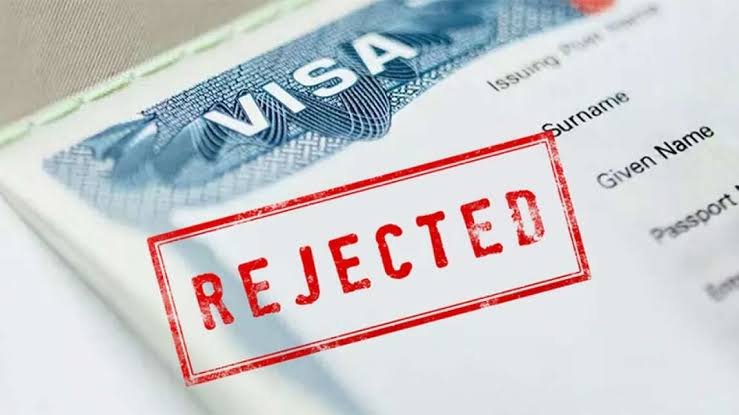
Receiving an admission letter from your dream university abroad is a huge milestone, but it is only half the battle. The final—and most critical—hurdle is securing your student visa. Every year, thousands of capable international applicants face visa refusals, not because they lack academic merit, but because of avoidable errors in their visa applications.
Immigration authorities—such as IRCC (Canada), the Department of Home Affairs (Australia), US Citizenship and Immigration Services (USCIS), and UK Visas and Immigration (UKVI)—adhere to strict legal frameworks.
Understanding why student visas get refused is the best way to protect your application. Here are the 7 most common reasons student visas get rejected and concrete strategies to avoid them.

Summary Matrix: Reasons for Refusal & Solutions
Unconvincing SOP / GS ResponseGeneric motivation, copy-pasted text, or weak career logicWrite a tailored, evidence-backed Statement of Purpose.Insufficient Proof of FundsUnexplained lump sum deposits or weak financial sponsorsMaintain 3–6 months of clean bank history with clear income sources.Illogical Study ProgressionDowngrading degree levels or changing fields without justificationBuild a logical bridge connecting your past background to your new course.Unexplained Academic GapsEmpty years between studies or jobs without documentationProvide verifiable work experience certificates or official training proofs.Document Inconsistencies & MisrepresentationMismatched dates, missing translations, or undisclosed visa historyConduct a thorough cross-check of all application forms and records.| Refusal Cause | Primary Trigger | Prevention Strategy |
| 1. | ||
| 2. | ||
| 3. | ||
| 4. | ||
| 5. Lack of Non-Immigrant Intent | Failing to demonstrate ties to your home country | Clearly articulate post-study career plans in your home country. |
| 6. Poor Visa Interview Performance | Memorized, evasive, or contradictory answers during interviews | Practice concise, natural responses focusing on course structure and funding. |
| 7. |
1. Unconvincing Statement of Purpose or Genuine Student (GS) Statement
Whether it is the Genuine Student (GS) test in Australia or the Letter of Explanation in Canada, visa officers place heavy emphasis on your written motivation.
-
The Problem: Submitting a generic essay that sounds copy-pasted or fails to explain why you chose a specific university over local options.
-
How to Avoid It: Customize your SOP. Clearly justify why you selected that institution, what specific modules you will take, and how the program directly impacts your career growth back home.
2. Failure to Prove Financial Capacity & Funds Availability
Immigration departments must be confident that you can cover your tuition fees, health insurance, and living expenses without resorting to illegal work.
-
The Problem: Sudden, unexplained large cash deposits (termed “parked funds”) in bank accounts right before submitting the application, or using sponsors with unverified income streams.
-
How to Avoid It: Show a clean financial trail. Provide bank statements reflecting gradual, consistent balances over 3 to 6 months, backed by tax returns, salary slips, or official property evaluation reports.
3. Illogical Course Progression & Unjustified Major Changes
Visa officers look for logical continuity in your education.
-
The Problem: Applying for a Master’s in Marketing when your Bachelor’s degree was in Mechanical Engineering, without explaining the change in direction; or applying for a lower-level qualification (e.g., a Diploma after already completing a Bachelor’s).
-
How to Avoid It: Choose programs that show clear progression. If switching fields, use your SOP and resume to show a logical bridge—such as professional work experience or certified online courses that triggered your shift in career direction.
4. Unexplained Academic or Career Gaps
A gap in your timeline is not an automatic ground for rejection, but an unexplained gap is a major red flag.
-
The Problem: Having unaccounted years between your high school, undergraduate degree, or employment history.
-
How to Avoid It: Account for every month since your last qualification. Submit formal experience certificates, pay slips, appointment letters, or certificates for short courses and medical leave to back up your timeline.
5. Weak Ties to Your Home Country (Section 214(b) & Non-Immigrant Intent)
For destinations like the U.S. and Canada, applicants must prove that their primary intention is to complete their studies and return to their home country.
-
The Problem: Expressing an intention to settle permanently abroad during visa interviews or failing to demonstrate strong social, economic, or family ties to your home country.
-
How to Avoid It: Outline specific short-term and long-term career opportunities waiting for you in your home country upon graduation. Detail family commitments, inherited property, or existing business ventures that anchor you to your home market.
6. Poor Performance in the Visa Interview
For destinations requiring face-to-face evaluation (such as the U.S. F-1 visa interview), your oral communication holds immense weight.
-
The Problem: Providing memorized, robotic responses, contradicting information listed on your application forms, or appearing uncertain about basic university details.
-
How to Avoid It: Conduct mock interview sessions. Know your university’s location, total tuition costs, exact funding sources, and course outline inside out. Answer concisely, naturally, and honestly.
7. Document Inconsistencies & Non-Disclosure of Past Refusals
Immigration databases are interconnected globally, and integrity checks are extremely thorough.
-
The Problem: Discrepancies in birth dates, mismatched names across passports and educational certificates, or failing to declare a past visa rejection from any country. Undisclosed refusals are treated as misrepresentation and can result in multi-year bans.
-
How to Avoid It: Be 100% transparent. Always disclose past visa refusals and explain what has changed in your profile since then. Double-check that all official names, dates, and numbers match seamlessly across every submitted document.